language learning assessment
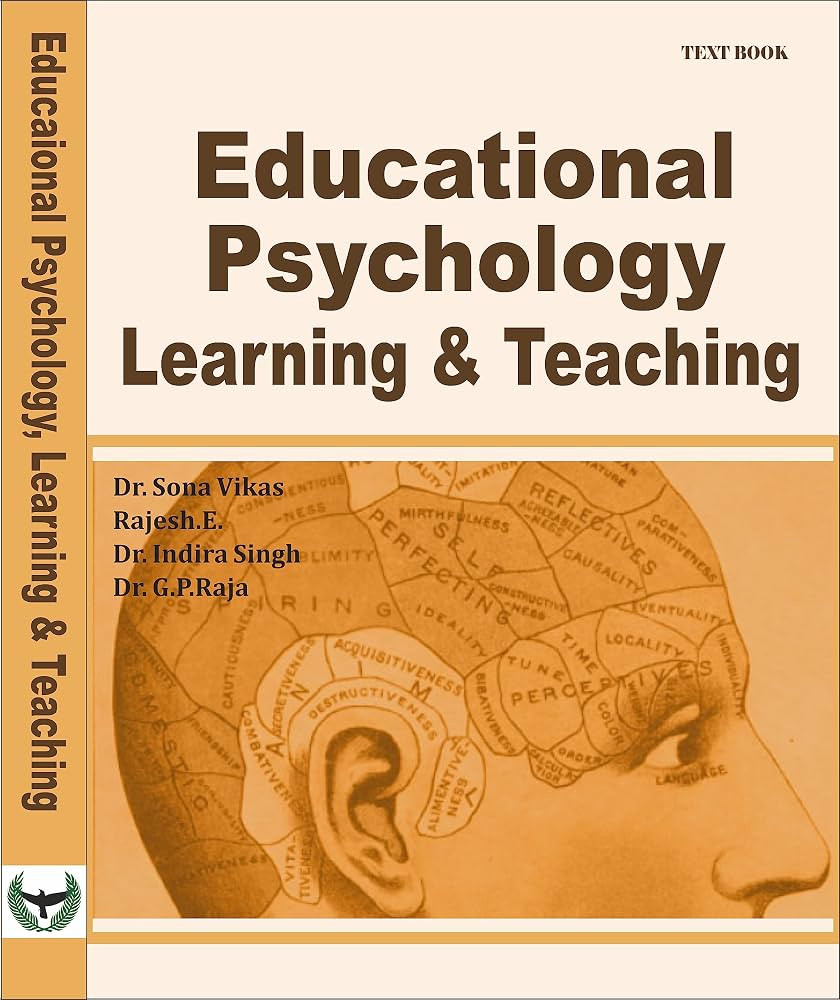 |
Educational Psychology is the branch of psychology that studies how students learn, develop, and behave in educational settings. It aims to help future teachers understand the learning process, explore the main theories of learning, identify the roles of motivation, memory, attention, emotions, and individual differences, and apply psychological principles to classroom situations in order to improve teaching effectiveness, classroom management, and students' academic achievement. |
Course objectives
• General concepts and notions on the nature of foreign language teaching, and English as a foreign language in particular
• The process of EFL teaching and learning; the objectives of EFL teaching and learning
• Notions on didactics and pedagogy, and the triangle of didactics (teacher, learner, lesson/knowledge)
• Methods and techniques of English language teaching
• Teaching the productive and receptive language skills
This module introduces students to the practical and analytical aspects of translation, with a focus on transferring meaning accurately and naturally from English into Arabic. Students will develop their ability to analyze source texts, identify translation problems, select appropriate strategies, and produce translations suited to different audiences, purposes, and contexts. Through practical tasks, peer feedback, and revision activities, students will strengthen their translation skills and learn to explain and justify their translation decisions.
This module introduces students to ethical reasoning and decision making in academic and professional contexts. Through real-life dilemmas, case studies, and interactive discussions, students explore key concepts such as ethics, morality, deontology, values, norms, and academic integrity. They learn to analyze ethical problems through different perspectives in order to develop critical thinking skills and make responsible, well-justified decisions.
This module introduces students to the fundamental principles of teaching and learning, focusing on teachers’ roles and responsibilities, teaching methods and strategies, lesson planning, learner-centred approaches, and classroom interaction. It aims to develop students’ basic pedagogical knowledge and practical skills for effective teaching.
✍️ Write with clarity. Think critically. Communicate with confidence.
Writing Techniques is a practical journey into academic writing, helping Master 1 Didactics students turn ideas into clear, well-structured, and convincing texts. Through reading, writing, discussion, and hands-on practice, you’ll develop the skills to write academically, use sources responsibly, and become a more confident writer.
Research methodology at the stage of Master's is of crucial importance for the completion of the MA Didactics of English as a Foreign Language course. This semester introduces Quantitative Research methods as it is often an almost inseparable part of dissertation writing. By the end of this semster, students are expected to be familiar with:
Measurement in the social sciences and the different levels of measurement.
Normality assumptions of the data distribution
Questionnaires and Surveys
Psychometric properties of the instruments
Inferential statistics (Relationships)
Inferential Statistics (Comparisons)
Parametric vs Non-parametric tests
Probability vs Non-Probability Sampling.